

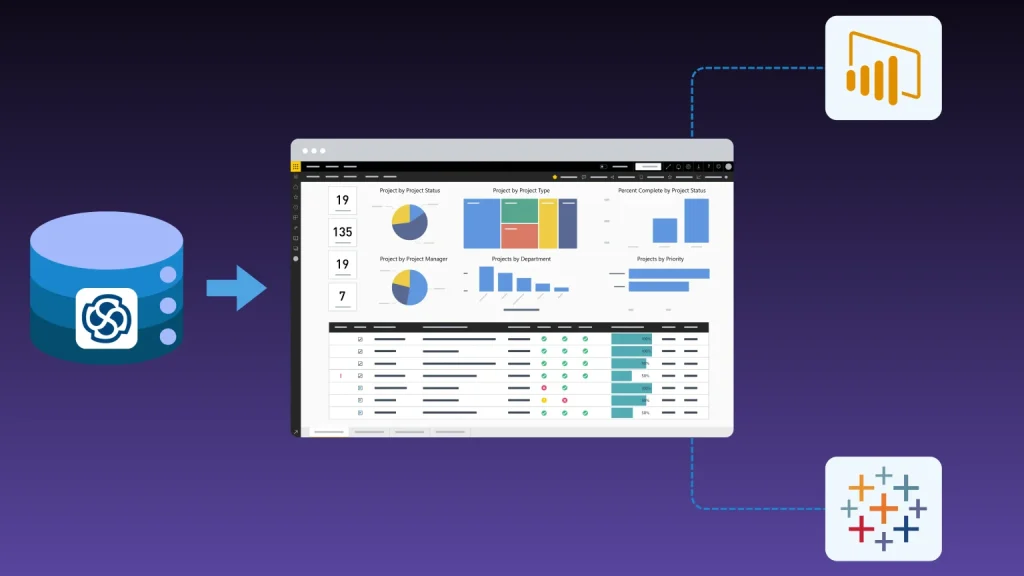
In today’s fast-paced business environment, decision-makers need quick and efficient access to data to make informed decisions. Traditional methods of data retrieval and analysis are often time-consuming and fragmented, leading to delays and potential missed opportunities. This is where enterprise dashboards come into play, offering a centralized solution that allows decision-makers to see all their data in one place.
The Challenge: Data Fragmentation #
Decision-makers don’t have time to go searching for data. In large enterprises, data is often spread across various departments, systems, and formats. This fragmentation creates significant challenges for CIOs and other executives who need a comprehensive view of their organization’s performance. Enterprise Architects and Application Portfolio Management teams have a particular challenge in that their audience of CIOs and business leaders are bombarded with data coming from all over the place – emails, presentations, meetings, reports, and news in the market. Asking these leaders to go to yet another dashboard solution within an APM tool or Enterprise Architecture Management system ends up making the fragmentation problem worse for the executive, not better. There has to be a better solution!
The Solution: Integrated Enterprise Dashboards #

The more integrated your data is, the easier it is to see meaningful insights. Enterprise dashboards consolidate data from multiple sources, providing a single pane of glass for viewing, analyzing, and acting upon information. By integrating data from different departments and systems, dashboards enable a holistic view of the organization, allowing for more strategic and informed decision-making. Microsoft Power BI and Tableau are the most widely used enterprise dashboarding solutions on the market today and are actively used by c-suite executives to monitor metrics from across their areas of responsibilities.
Benefits of Enterprise Dashboards #
Real-Time Data Access: #
- Instant access to up-to-date information.
- Faster reaction times to market changes and internal issues.
Available at the Point-of-discussion: #
- Accessible in the leader’s office, mobile device, meeting rooms, and in the field
- Eliminates the need to “go find that information and come back”
Enhanced Data Visualization: #
- Clear and concise representation of complex data
- Interactive elements for deeper analysis
Improved Collaboration: #
- Shared insights across departments
- Better alignment of organizational goals and strategies
Ease of Access: A Key Factor in Data Utilization #
The data that is easiest to access is most likely to be used – more often. Enterprise dashboards are designed with user-friendly interfaces and customizable views, making it easy for decision-makers to access and interpret the data they need. This ease of access ensures that executives are more likely to utilize the dashboard regularly, leading to more consistent and effective decision-making.
As technology continues to evolve, enterprise dashboards are expected to become even more sophisticated, incorporating advanced features such as artificial intelligence (AI) and machine learning (ML). These advancements will further enhance the ability of decision-makers to access, analyze, and act on data quickly and accurately.
Enterprise Dashboards & Your Sparx EA Repository #
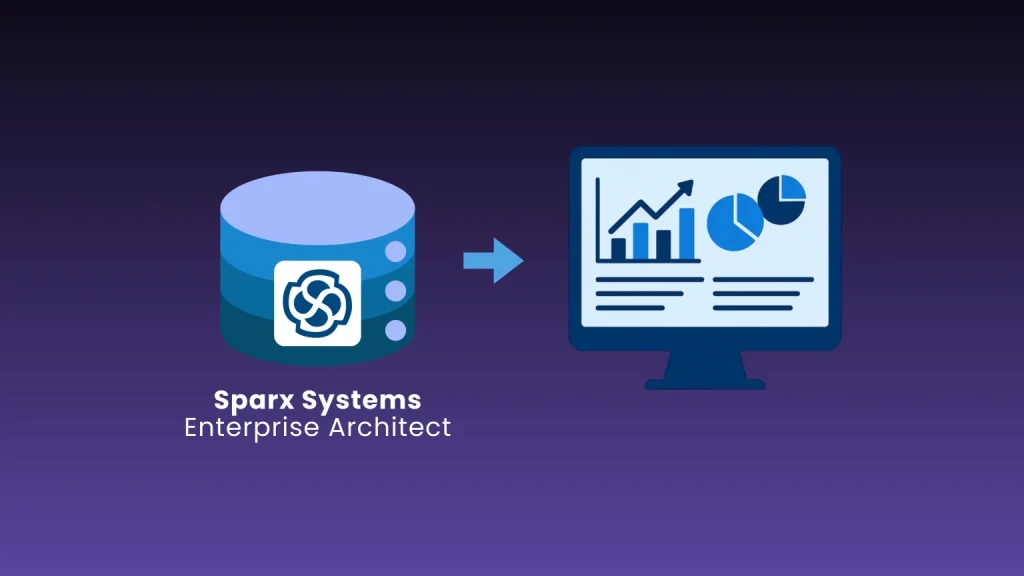
The data contained within an organization’s Enterprise Architecture repository can be a priceless asset for decision making. The challenge is how to get the data out of the architecture repository and into the hands of decision makers at time they are presented with business questions/problems so they can rapidly analyze the situation and make informed decisions.
Sparx Systems Power BI Integration simplifies architecture data by translating repository content into a business-friendly format that analytics tools like Power BI, Tableau, and even AI-driven solutions. By combining your Sparx Systems Enterprise Architect models with operational data from systems such as CRM, ERP, HRM, and ITSM, and presenting them through Power BI dashboards, you gain powerful, holistic insights to guide strategy and decision-making.
To speak with our sales team regarding Power BI integration for your Sparx deployment or to request pricing please complete the contact form.
Subscribe to our Newsletter
Get product updates, feature tips, and integration insights in your inbox.